
More Than a Slogan. How More than 20 Aussie Businesses Banded Together
- Written by a contributor
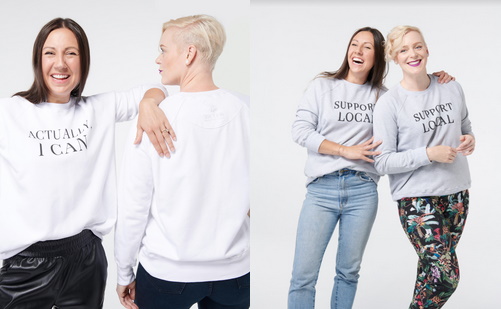
During the height of Melbourne’s longest lockdown in July of 2020, corporate lawyer turned Founder and CEO Kate Dillon, dismayed by the number of local businesses on the brink of shutdown, including her own online luxury handbag business, She Lion, embarked on an ambitious project to ‘support local’.
While “Support Local” has increasingly been the focus of many campaigns, Kate was motivated to find a wholly tangible way to give back to the local business community.
“We were in the middle of a two-week lockdown in March that turned into almost 6 months. The collective mood across Melbourne was pretty depressing. The inspiration actually came about after I posted an image of myself in an empowering slogan tee. I received so many positive comments and recognised I could create something to support Melbourne makers AND offer a pick-me-up to my own customers,” Kate Dillon said.
The concept: An end to end Australian supply chain for a new range of garments made from natural fibres, with as many processes as possible completed here in Melbourne.
Intended to empower and motivate customers, while directly supporting local Melbourne manufacturers and businesses Dillon decided on launching with a quality line of 100% cotton sweatshirts featuring the slogans: “Support Local” and “Actually, I can.”
“I put out a cold call to Melbourne family-run clothing manufacturer, CGT Australia about the concept and managed to speak with the Director, Phillip Skorsis. He proceeded to spend hours guiding me through the process, sharing industry knowledge and completely opening his book of local contacts. I was floored by the generosity and thrilled with the response.” said Kate.
What followed was a collective effort in overwhelming kindness and compassion. In total, 22 businesses from a Melbourne knitting mill through to a Melbourne distribution centre came together to bring the 100% local project to life.
“We want to invest a million dollars into new equipment so we can continue to become more high-tech and environmentally friendly, but we can’t do so if processes keep getting shifted offshore. A project like this gives us hope for the future of the industry” said Sam Veskoukis from Richmond Industrial Laundry.
Most Australian consumers will have very little understanding of how many different businesses are involved in the supply chain of any garment. Even if an item is designed, and constructed in Australia, it is very often milled, cut, dyed, graded and sampled offshore as labour costs can be far cheaper. To truly ‘support local’, each and every element in the manufacturing that could be kept in Australia was, even in the face of three different lockdown periods for Melbourne that brought production to a complete halt in September 2020.
“It’s essential to the survival of Australian business that we shop in our own backyard and source products from home. There are so many companies still manufacturing in Australia and it is important people know how to support them and where to find them,” said Tanya Cahir from Melbourne distribution centre, Direct Mail Corporation.
Though the concept for the project came about in June ‘20, it has taken nearly 12 months to come to fruition. The many lockdowns the Melbourne community faced in 2020 (and now in ‘21) saw drastic changes to the way many people work. Most meetings to troubleshoot tricky pattern issues, fittings that would normally be in-person and sampling were often done remotely with items being shipped back and forth. Each manufacturer faced its own specific logistical and personnel challenges.
“In March 2020 we had to consider how to continue operating through the pandemic. I jumped at the opportunity to help Kate at She Lion to create these sweatshirts because ‘support local’ is more than just a slogan and as a family-owned and run business, it’s personal.” said Director of CGT Manufacturing Australia, Phillip Skorsis.
That’s why, in the face of many logistical delays, remote working challenges and everything that living through lockdowns threw at the team, Kate remained dogged to stay true to the mission. Because supporting local is personal and essential to the recovery of the local economy and actually… she could make it happen.
A snapshot of the Australian based businesses involved to bring the project to life:-
Melbourne fabric miller and manufacturer - TopKnit Fabrics Australia
-
Melbourne designer - She Lion Group Pty Ltd
-
Melbourne pattern maker - Clothe Creative Pty Ltd
-
Melbourne dark room sampler (during lockdown) - Stella Park Design
-
Melbourne grader - William Stanley; Markit Apparel
-
Melbourne garment manufacturer - C.G.T. (AUST) Pty Ltd
-
Melbourne label maker - Akie Labels Pty Ltd
-
Melbourne dye house - Leading Textiles
-
Melbourne industrial wash house - Richmond Industrial Laundry
-
Melbourne graphic designer - Tess Carpenter
-
Melbourne screen-printer - TShirt Oz Pty Ltd
-
Melbourne embroiderer - Fiddes Sport
-
Melbourne photographer - Rufus + Cooper Pty Ltd
-
Melbourne growth marketer - Chanie Hyde
-
Melbourne recycled polybag manufacturer - PinPak
-
Melbourne cardboard box manufacturer - Visy
-
Melbourne distribution centre - Direct Mail Corporation
-
Melbourne cartoon infographic artist - Matthew Handley, Highly Visual
-
Melbourne videographer - Visual Domain Pty Ltd
-
Melbourne PR - Elise Hendriksen, Shout PR
-
Sydney barcode sticker printer - Fast Printing Group Pty Ltd
-
Sydney social media - Maxco Pty Ltd
ABOUT SHE LION:
She Lion was founded in 2015 by corporate lawyer, Kate Dillon. Kate was disheartened at being unable to find a stylish and functional bag that could organise and carry everything she needed so she decided to create her own. More than just a bag brand, She Lion exists to support working women with luxurious tools of the trade and empowerment through essential business information and community support. The company is entirely owned, led and run by women who share this mission.


